Your analysis, made interactive.
WarPaths turns a published report into a scenario your audience plays. Readers take a seat in the problem your analysis describes and reason through it turn by turn, and what comes back to your organization is a read on how they reasoned.
What are the three steps?
- Step 1
Upload and draft
Upload a report as a PDF. WarPaths drafts a scenario from it, usually within minutes: the actors, the tensions, a crisis in several decision turns, advisors who disagree, and the criteria your participants are evaluated against.
- Step 2
Edit and sign off
The draft cites the passages it drew on, with page references. Walk it step by step in the authoring workflow: sharpen the actors, rewrite the turn questions, cut what does not serve the exercise. Nothing is published until you approve it.
- Step 3
Invite and receive the read
Approval publishes the scenario to your audience and only your audience. Set a cap, mint an invite link, and share it however you reach your readers. What comes back is how they reasoned: their written responses and a consolidated read of the cohort.
Why put a report in play?
- Influence
- Reading is passive; deciding is not. A reader who has to act inside the crisis your report describes carries its argument further than one who downloaded the PDF.
- Research avenues
- The cohort’s reasoning shows where your audience diverged from your conclusions and can indicate new avenues for research. A post-game survey you write yourself asks the overarching questions you want answered.
- A durable asset
- A webinar is over the next day. The scenario stays live for your audience through the invite window, and the record of how they reasoned stays with you.
How does it work?
Upload a report as a PDF and WarPaths drafts a scenario from it, citing the passages it drew on with page references so your authors can check the reading. A validation report flags any turn where one answer is too obviously right. You keep the pen: review, modify and approve the game before release. Approval publishes it to your audience alone; you mint an invite link that stops at your cap and works for 30 days.
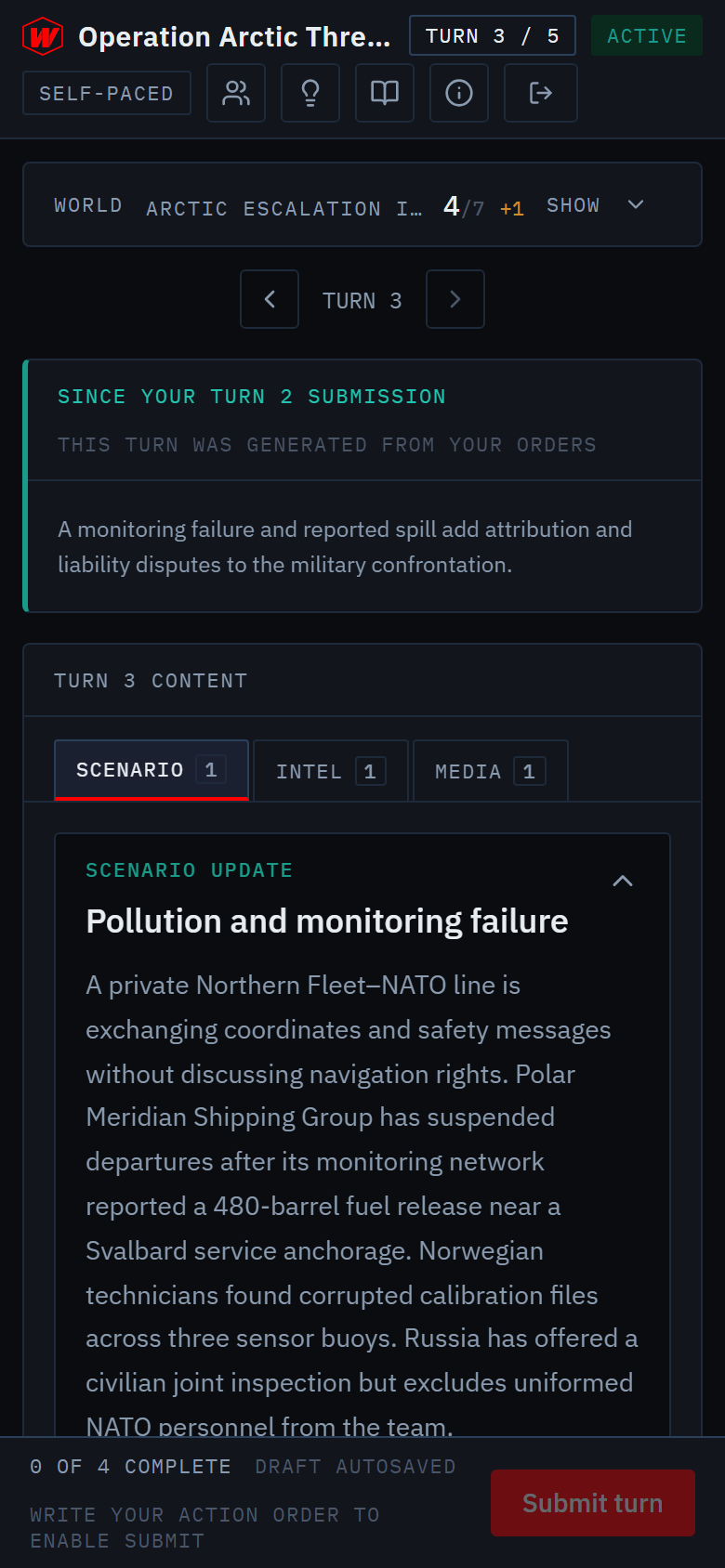
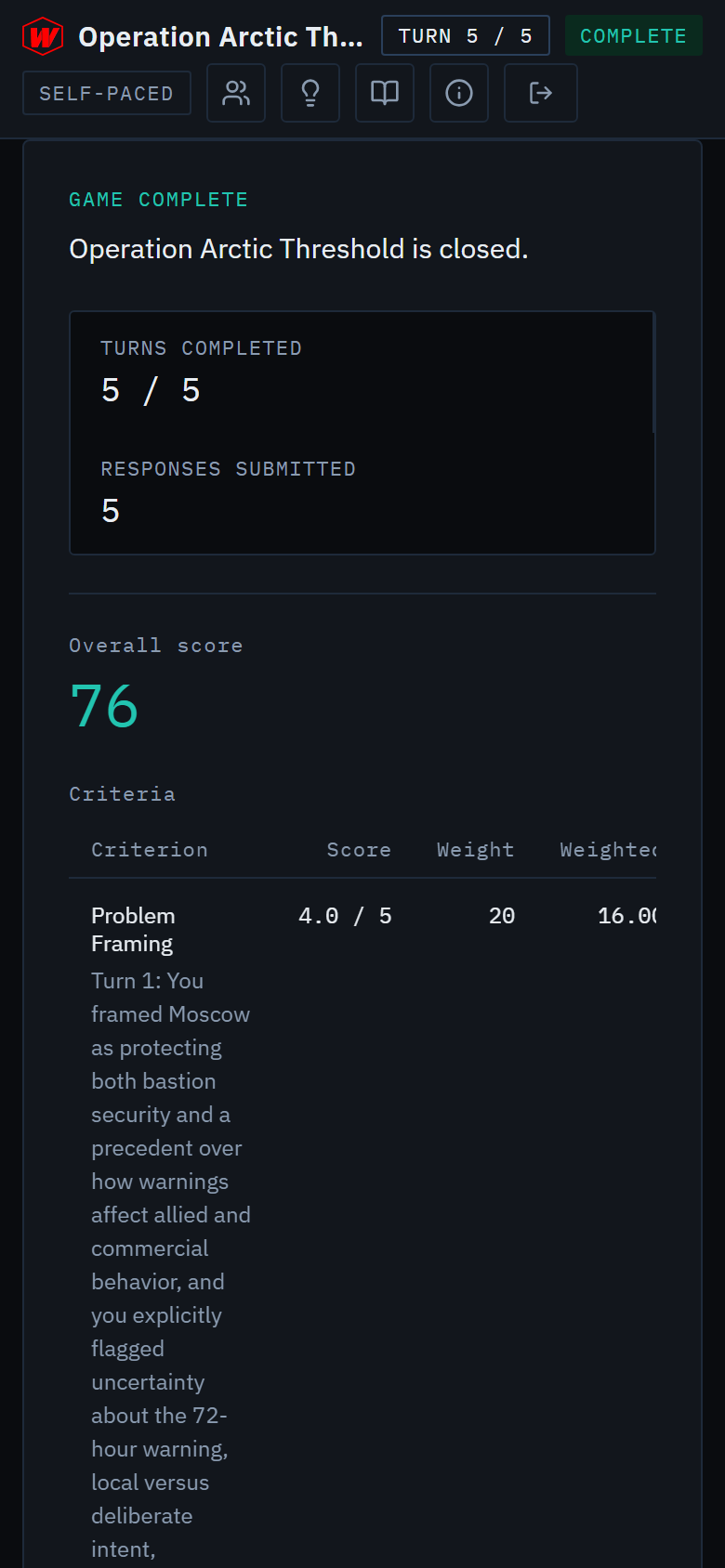
A participant opens your link, creates an account of their own, and plays: several decision turns in the seat you built, weighing its advisors and evidence and writing each decision in their own words. It runs in a browser, on a phone or at a desk. At the end each participant receives an individual evaluation across five dimensions. You can hold the whole cohort at a turn and release them together, or let each move at their own pace.
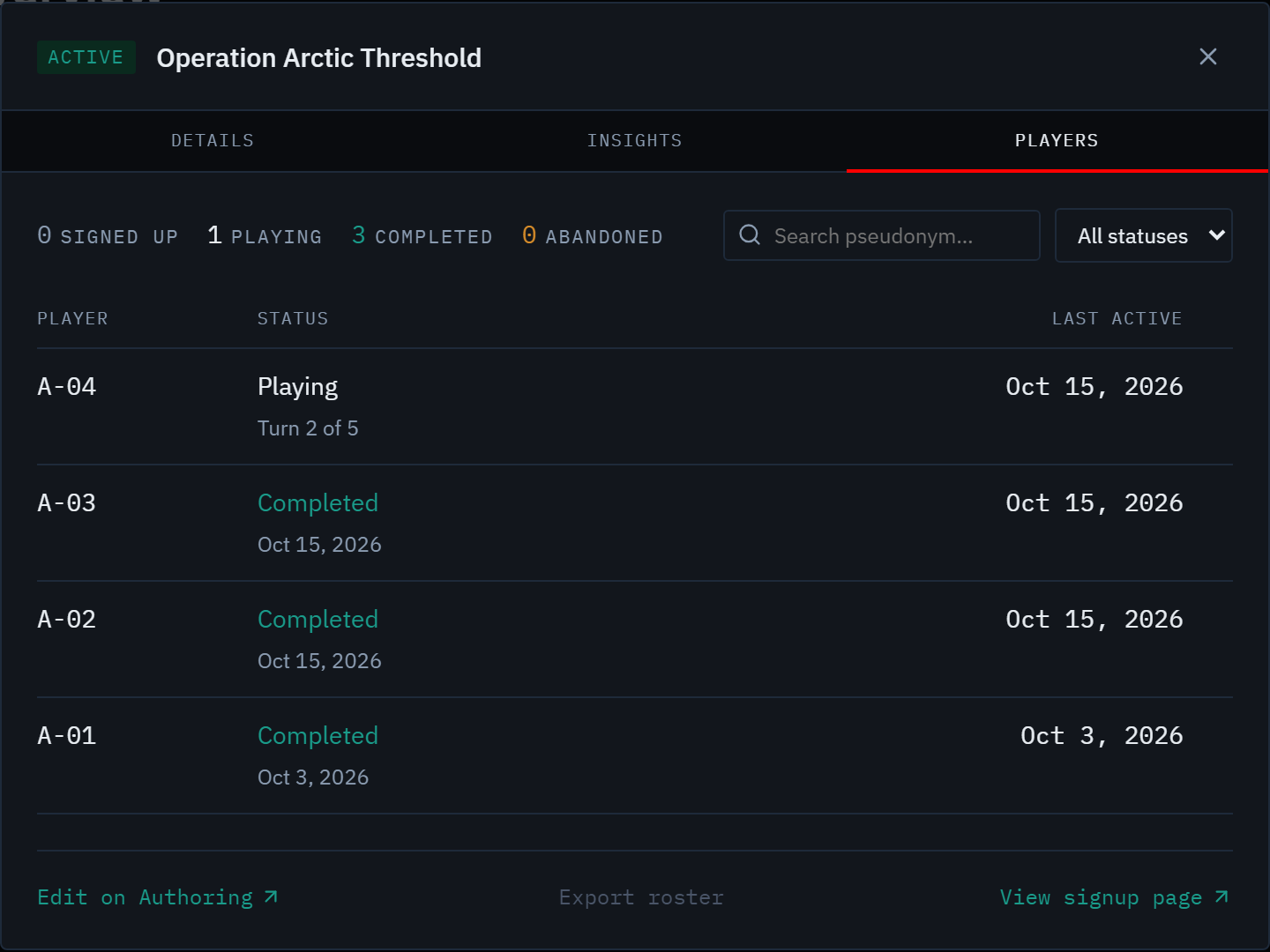
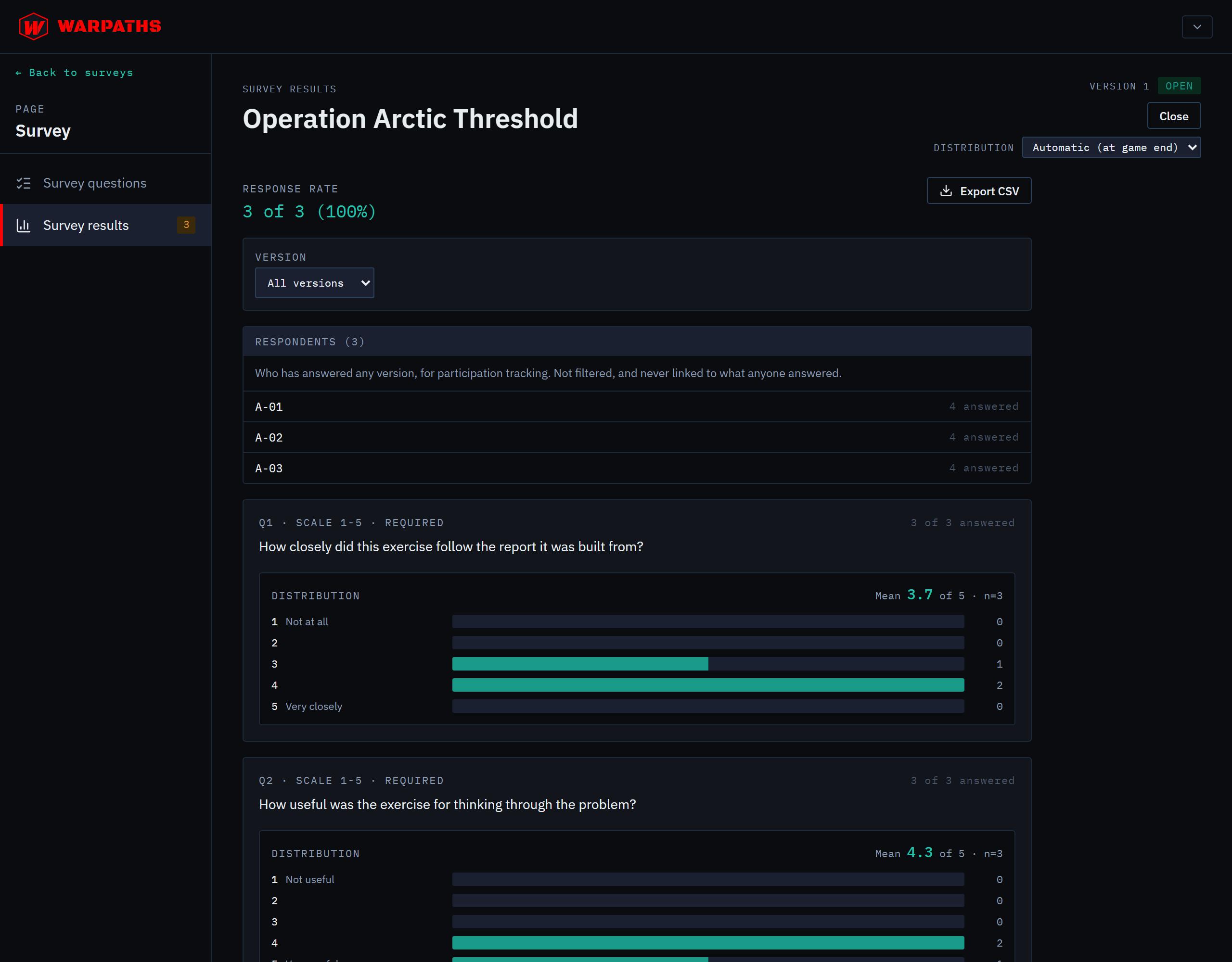
From the first sign-up, your cohort view shows who has joined and who has finished. Once five participants have finished — the floor that keeps the read about the cohort, not a person — you receive their written responses under a code and a consolidated read of how they reasoned about your research; a survey you write yourself reports per-question results and a CSV export once three have answered. Your report itself is never stored: WarPaths keeps a fingerprint of the file and a bounded set of short, page-referenced excerpts your authors use to verify the reading, and nothing else.
Will the scenario get our argument right?
The draft cites the passages it drew on, each with a page reference, so a reviewer can hold the scenario against the report line by line. Your organization reviews and edits every turn before anything is published; the authoring workflow exists for that review. And nothing goes live without the author’s sign-off: approval is yours, and it is what publishes the scenario.
If the draft reads the report wrong, the citations show where, and the edit is yours to make before a single participant sees it.
Can you play it yourselves first?
Yes. Approval publishes the scenario to your invite link and nowhere else: it never appears in the public catalog, and nobody reaches it without the link. So approve, mint the link, share it with your own staff first and play it through, then widen distribution to your audience when you are satisfied. The cap and the 30-day window run from the mint, and your colleagues’ plays count as participants: against the cap, in the cohort view, and in the read once five have finished.
What does it look like?
Screens from a test scenario, with participant codes in place of names.

What do organizations build?
Two topics have a page of their own: how the games are used, who runs them, and how a report on the topic becomes a private game for the organization’s own staff.
- Infrastructure resilience
A degraded grid, cable network or water system: what keeps running, what is restored first, what the public is told.
- Supply chain resilience
Chokepoints, foreign dependencies and surge capacity under wartime demand.
- Alliance deterrence
Deterrence posture, force design and keeping a commitment credible when an incident is ambiguous.
How do you start?
Identify a report you would want your audience to engage with, and we’ll help you create your scenario.